 Burrow
Earth-Sheltered Architecture
The house the land keeps.
The Two-Bedroom
Hillside Tuck.
A retired hydrological engineer and her husband owned 18 acres of south-facing slope in the Cascades. She'd read every passive house whitepaper. He'd priced three geothermal contractors. Neither wanted a conventional structure.
Site Assessment Data
Slope Grade
14°
Soil Type
Silty Clay Loam
South Exposure
187° azimuth
Frost Depth
28 in.
"We didn't want a house on the land. We wanted a house that was part of the land. Burrow understood that immediately — they talked about soil bearing capacity before they talked about floor plans."
— Dr. Margaret Osei, Structural Hydrologist (Ret.)
Build Sequence
Slope excavation: 11 weeks, single Cat 330 excavator
Poured-in-place concrete vault: 18" walls, 24" roof slab
Waterproofing membrane + drainage mat installed
Living sod roof — 14" growing medium, native grasses
South-facing glazing: triple-pane, 0.17 U-factor
Drone — Post-completion, June 2022
1,840
sq ft
Thermal Envelope — Cross Section
Pacific Power — January 2023
Regional avg. comparable home: $287/month
January Heating Bill — Cascade Ridge
In a month when regional comparable homes averaged $287. The vault's thermal mass does the work.
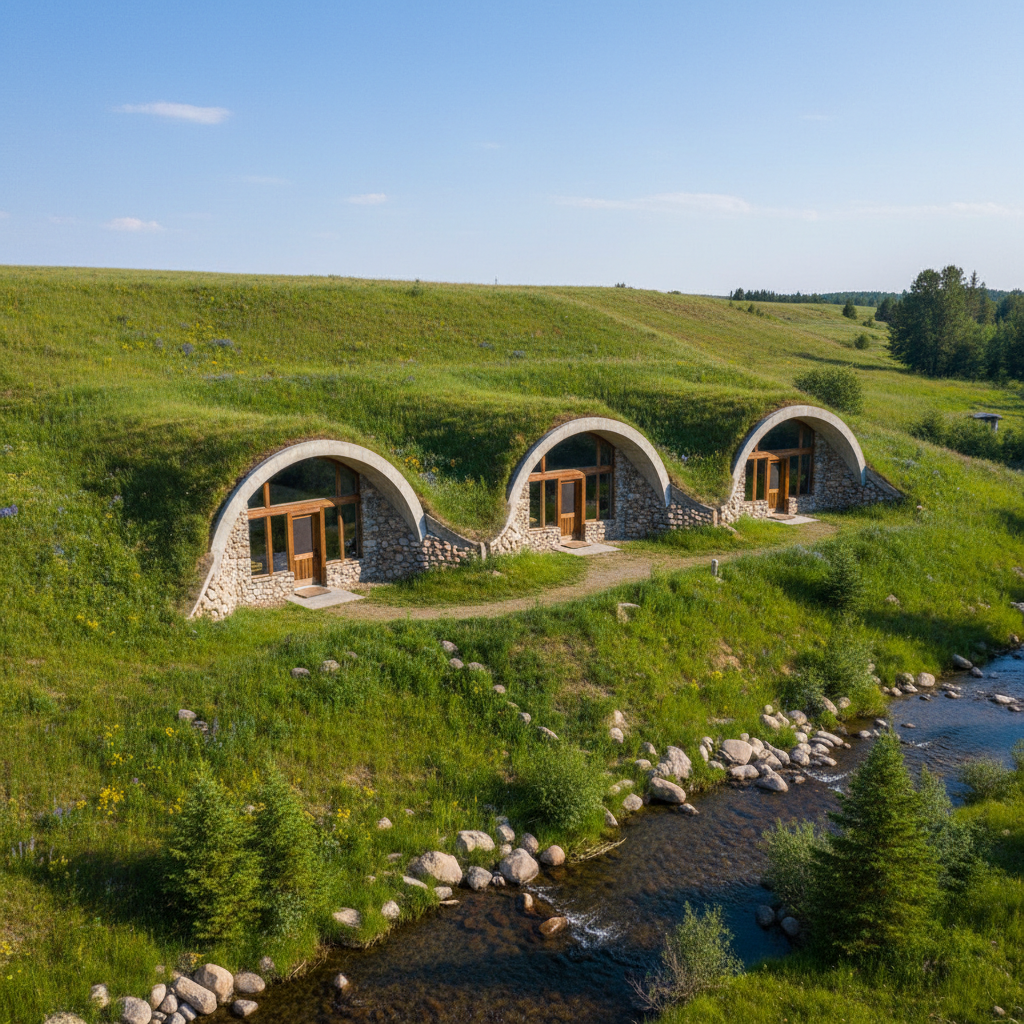
Aerial — Iron Creek Compound, Sept 2023
Compound Layout — 3-Unit Configuration
Annual Energy vs. Conventional
The Three-Unit
Compound.
An off-grid couple had priced geothermal loops for two years. They bought 240 acres in the Bitterroot Valley knowing they wanted to eventually house aging parents and a working studio — without three separate utility accounts or three separate roofs.
Site Conditions
Acreage
240 ac.
Slope Grade
11°–17°
Soil Bearing
2,800 psf
Annual HDD
7,240
"We kept asking: can we connect the units underground so my mother never has to step outside in January? The answer was yes, and the tunnel ended up being our favorite part of the whole project."
— Devlin & Priya Nakamura, Iron Creek Compound
Engineering Highlights
Continuous reinforced concrete connecting tunnel — 47 linear feet
Shared mechanical room: single ASHP + ERV serving all 3 units
Rainwater harvesting: 8,000-gal buried cistern, gravity-fed
Living roof meadow: native bunchgrass, walkable by cattle
On-site photovoltaic array: 22 kW, buried conduit to each unit
Annual energy load vs. code-minimum conventional
Three households, one mechanical room, one utility account. The compound uses less energy than a single code-minimum ranch house.
The Off-Grid
Estate.
A second-home buyer had 600 acres of Wyoming rimrock and a simple requirement: a structure his grandchildren's grandchildren could use. No utility easements. No maintenance dependency. A building that improves the land rather than extracting from it.
Site Conditions
Acreage
600 ac.
Elevation
5,840 ft
Annual Snow
180 in.
Seismic Zone
IBC D1
"I've built four homes in my life. Every one of them will be demolished before my grandchildren are fifty. I wanted this one to still be here in 300 years. Burrow built me a structure that thinks in geological time."
— Thomas Whitfield, Rimrock Estate
Systems Inventory
4 × 10,000-gal buried concrete cisterns — gravity distribution
38 kW ground-mount solar array with buried conduit to vault
800 kWh battery bank: 14-day autonomy at full load
Geothermal ground loop — 6 × 300-ft vertical bore
Living-roof meadow: 4.2 acres, cattle-grazable, no irrigation
Structural lifespan estimate: 500+ years (poured concrete vault)
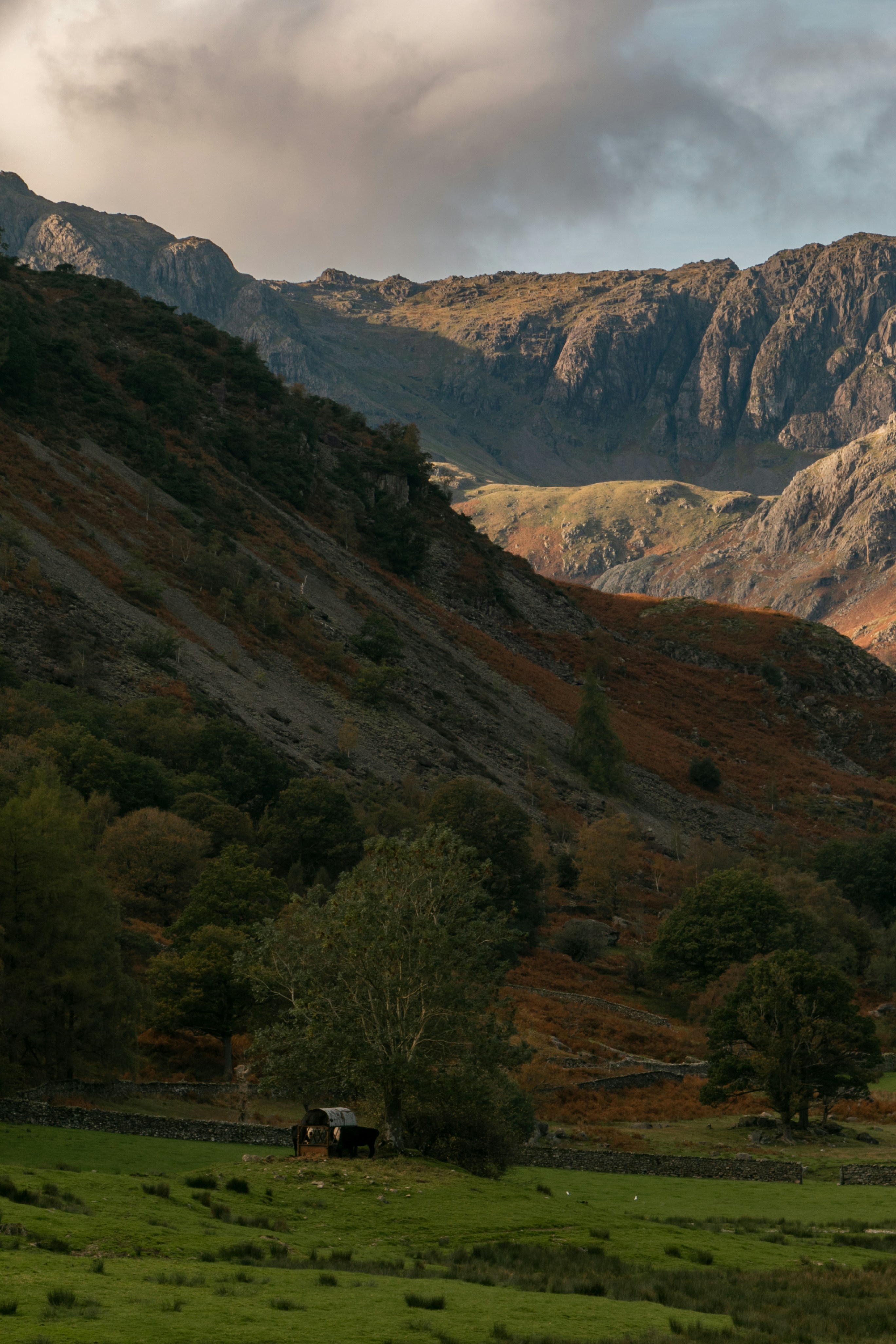
Aerial — Rimrock Estate, August 2024
500+
yr lifespan
Off-Grid Systems — Schematic
Grid Independence Record
Consecutive off-grid days
412
Grid kWh purchased (Year 1)
0
Annual water from sky
94%
Utility bills, 2024
$0
Consecutive off-grid days — Year 1, Rimrock Estate
One year in, the grid had never been touched. The vault maintained 68°F interior temperature through a Wyoming winter that dropped to −34°F.
47
Projects Completed
79%
Avg. Energy Reduction
500yr+
Structural Lifespan Est.
11
States Built In
"We build the way the earth builds — slowly, with mass, with patience. A Burrow vault doesn't fight the climate. It disappears into it."
— Reed Calloway, Founder & Lead Structural Designer
Passive House Certified Builder
ACI 318 Concrete Standard
LEED BD+C New Construction
NABCEP PV Installation
Does your land
qualify?
Not every slope is a vault waiting to happen. The intake takes 20 minutes. We review your topographic data, soil type, and sun angles — then tell you honestly what's possible and what it would cost.
What we assess in the intake
South-facing slope angle (8°–22° optimal)
Soil bearing capacity & drainage class
Frost depth & seismic zone
Solar access window (hours/day at winter solstice)
Utility easement conflicts & permit jurisdiction
Walk your property with a purpose before we talk.